
Rescue 365 · Independent UK operator network
Electric Vehicle Recovery Services Across the UK
If an electric car cannot continue safely, share its make, model and condition when requesting recovery. Manufacturer instructions and suitable loading equipment matter — an EV must not be treated as a conventional towing job.
Electric Vehicle Breakdown Recovery
An electric car can become immobilised by a depleted traction battery, a low-voltage battery fault, tyre damage or another vehicle fault. Describe the symptoms and warning messages rather than assuming that charging alone will solve the problem.
Rescue 365 is a booking and dispatch platform connecting you with independent operators where available. We do not promise roadside charging, battery repairs or that every operator is an EV specialist.
What Makes EV Recovery Different?
Towing and recovery requirements vary by manufacturer and model. Some electric vehicles must not be towed with driven wheels on the road because this can damage the drivetrain. Follow the current manufacturer recovery instructions; do not use a generic towing rule.
A depleted low-voltage battery may prevent the vehicle entering transport mode or releasing its parking brake. Tell the operator if wheels are locked or the vehicle cannot be put into the manufacturer-approved loading configuration.
Recovering an Electric Car That Cannot Drive
Move yourself and passengers to safety before arranging recovery. Provide the exact model, location, accessible recovery instructions and details of any damage, locked wheels or battery warnings.
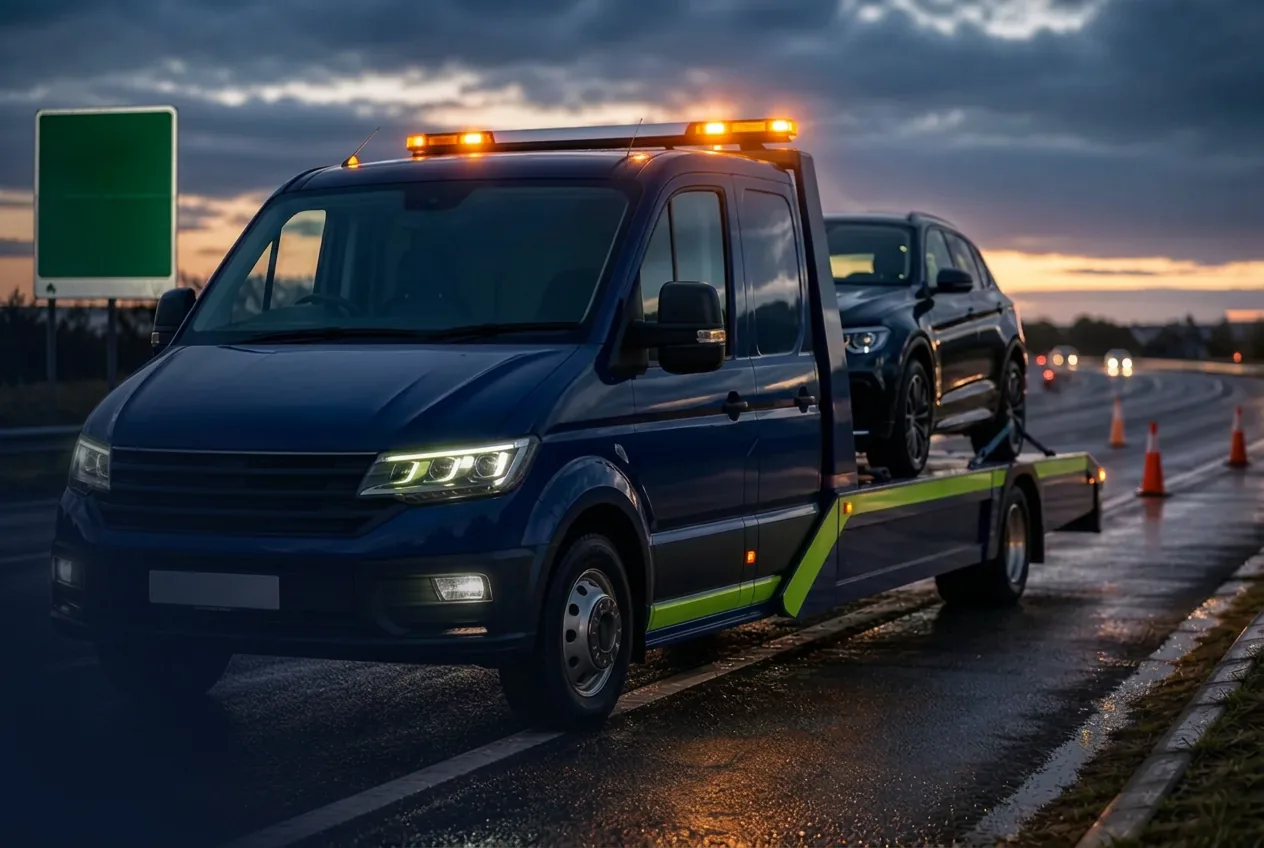
An operator must assess a safe loading method, often requiring a transporter or other suitable equipment in accordance with the vehicle’s instructions. Do not attempt to drag the vehicle or improvise tow points.
EV Transport and Specialist Handling
Electric vehicles can be heavier than comparable combustion cars. Weight, ground clearance, approved attachment points and loading angle all matter when selecting equipment.
After a collision, a damaged high-voltage battery can create electrical, chemical and fire risks. If there is smoke, unusual heat, hissing or a suspected battery fire, move away, keep others clear and call 999. Do not touch exposed cables, leaking substances or attempt battery isolation yourself.
Ordinary recovery booking does not establish that an operator is qualified or equipped to handle a damaged high-voltage battery. Such incidents may require emergency-service control and specialist assessment before transport is safe.
How to Request Electric Vehicle Recovery
- 01
Prioritise safety
For danger, injury or suspected battery fire, contact emergency services before arranging transport.
- 02
Identify the EV
Enter the car details and provide the exact make and model plus any warning messages or damage.
- 03
Share loading needs
Explain wheel movement, transport-mode availability and the manufacturer’s recovery requirements.
- 04
Request a quote
Review the upfront quote; recovery depends on acceptance by a suitable independent operator.
Submitting a request does not guarantee operator availability or acceptance. More about the booking process.
Electric Vehicle Recovery FAQs
Related recovery and transport guidance
General roadside guidance and the existing online recovery journey.
Safety guidance following a collision; damaged EV batteries need particular care.
Pre-booked transport with model-specific loading requirements.
Explore our UK recovery locations for local information. Acceptance depends on suitable operators being available in your area.
Need to arrange vehicle recovery?
Enter the vehicle and journey details, review your upfront quote and request a suitable independent operator.
Get a Recovery Quote